
THANK YOU FOR SUBSCRIBING

Pharma Tech Outlook Weekly Brief
Be first to read the latest tech news, Industry Leader's Insights, and CIO interviews of medium and large enterprises exclusively from Pharma Tech Outlook


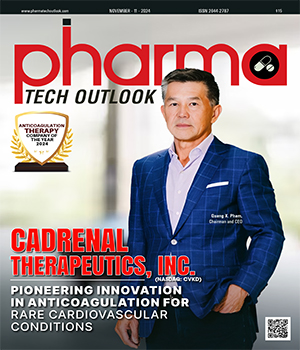
 Quang X. Pham, Chairman and CEO
Addressing the Limitations of Warfarin and DOACs
For nearly six decades, warfarin, the most commonly prescribed vitamin K antagonist (VKA), was the primary therapy to prevent strokes, heart attacks, and thrombotic events. However, warfarin’s gastrointestinal bleeding risks, drug-drug interactions and frequent dosing adjustments create challenges for both patients and healthcare providers. While DOACs—such as Eliquis and Xarelto—have improved treatment options for some patients, they are not recommended and lack clinical data for individuals with left ventricular assist devices (LVADs) and certain rare cardiovascular conditions.
This leaves a critical gap for patients who require lifelong anticoagulation but are underserved by existing therapies.
Tecarfarin: A New Therapeutic Solution in Development
Tecarfarin offers the promise as a next-generation VKA. Designed using retrometabolic drug principles, tecarfarin differs from warfarin by targeting a tissue esterase pathway for metabolism, rather than the liver’s CYP450 enzyme system. This unique metabolic design approach minimizes drug interactions, reduces variability in therapeutic levels, and does not interfere with impaired kidney function.
“Tecarfarin was designed to potentially offer safer, superior anticoagulation for patients with LVADs or end-stage kidney disease (ESKD) and atrial fibrillation (AFib),” explains Quang X. Pham, chairman and CEO of Cadrenal Therapeutics.
With its novel metabolic pathway, tecarfarin aims to improve outcomes for LVAD and ESKD and AFib patients. The once-daily and reversible investigational therapy is positioned to provide a more stable and predictable treatment for these individuals and may reduce healthcare provider hassles of frequent dosing changes, often due to warfarin’s instability or drug interactions.
Clinical Data Supporting Tecarfarin’s Promise
Tecarfarin has undergone 11 human clinical trials, enrolling more than 1,000 participants, with particularly promising results in patients. In a Phase 2/3 randomized, blinded trial, 607 patients requiring chronic anticoagulation were treated with either tecarfarin or warfarin. A subsequent retrospective and more in-depth adjusted analysis of that trial, EmbraceAC, showed tecarfarin achieved similar or better Time in Therapeutic Range (TTR) compared to warfarin. In addition, only 1.6 percent of patients experienced major bleeding events, and no thrombotic events were reported during the trial.
This data underscores tecarfarin’s potential to improve safety and reduce bleeding risks compared to existing therapies, especially in high-risk patients who require long-term anticoagulation.
Tecarfarin has been granted orphan drug designations by the FDA for the prevention of thrombosis (blood clots) in patients with LVADs and systemic thromboembolism in individuals with ESKD and AFib. In addition, tecarfarin has fast-track status for ESKD and AFib, recognizing its potential to address significant unmet medical needs. Upon approval, the drug may be eligible to receive seven years of market exclusivity in the U.S. and ten years in the European Union.
Operational Efficiency and Focus
Cadrenal Therapeutics operates with a lean, agile model, concentrating its efforts on drug development and regulatory submissions, as well as industry collaborations and partnerships.
Strategic Collaborations and Future Growth
Cadrenal is in collaboration discussions with Abbott, the global leader in LVAD manufacturing, to explore tecarfarin’s potential use alongside Abbott’s leading HeartMate 3 LVADs. This collaboration aligns with the company’s mission to advance innovative anticoagulation therapies that serve patients with implanted devices such as LVADs and rare cardiovascular conditions.
A New Era in VKA Anticoagulation Therapy
Tecarfarin’s innovative design, proven safety profile, and potential to close significant treatment gaps make it a promising candidate for the future of chronic anticoagulation therapy. By addressing the challenges posed by existing therapies, tecarfarin could offer a new standard of care for patients with limited treatment options, particularly those with LVADs or end-stage kidney disease plus atrial fibrillation. The company also plans to research tecarfarin’s potential in patients with mechanical heart valves who are not adequately managed with warfarin.
“As we advance tecarfarin to pivotal trials, we remain committed to offering better solutions for patients with LVADs or other rare cardiovascular conditions,” says Pham. “Our goal is to provide a safer, more effective anticoagulant that improves patient outcomes and quality of life for these underserved populations.”
With pivotal trials on the horizon and strategic partnerships in discussions, Cadrenal Therapeutics is poised to advance tecarfarin toward regulatory approval, offering new hope for patients. Through innovation, collaboration, and operational focus, Cadrenal aims to improve care for those with implanted devices or rare cardiovascular conditions.

Company
Cadrenal Therapeutics, Inc. (Nasdaq: CVKD)
Management
Quang X. Pham, Chairman and CEO and Dr. Douglas Losordo, Chief Medical Officer, Jeffrey Cole, Chief Operating Officer, and Matthew Szot, Chief Financial Officer
Description
Cadrenal Therapeutics is a biopharmaceutical company focused on the development of tecarfarin, a late-stage investigational anticoagulant designed to meet the unmet chronic anticoagulation needs of patients with implanted left ventricular devices and rare cardiovascular conditions. This novel oral anticoagulant offers safer, superior chronic anticoagulation for patients with end-stage kidney disease and atrial fibrillation conditions.