
THANK YOU FOR SUBSCRIBING

Pharma Tech Outlook Weekly Brief
Be first to read the latest tech news, Industry Leader's Insights, and CIO interviews of medium and large enterprises exclusively from Pharma Tech Outlook
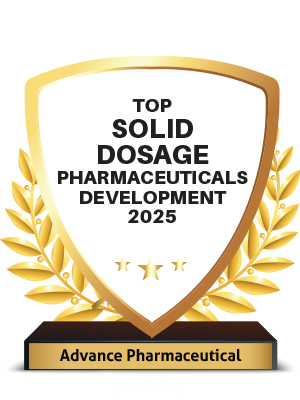
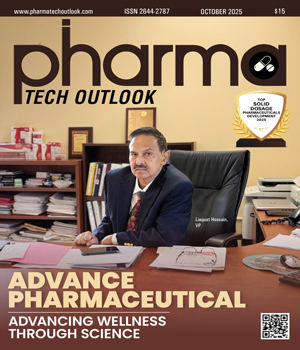
For more than 40 years, Advance Pharmaceutical has combined science and innovation to deliver health solutions that make a difference in people’s lives. That legacy of innovation reaches a new milestone with Revivify, a patented formulation that unites gut and cellular health to reduce oxidative stress, strengthen immunity and deliver lasting wellness. Revivify is built around proprietary Superoxide Dismutase (SOD) soluble fiber technology that achieves meaningful oral bioavailability for the first time. By unlocking SOD’s benefits in an oral form, the supplement supports the body’s natural microbial balance and immune function. Revivify is the next chapter in preventive health, blending technical mastery with innovation to address some of the most urgent health challenges. “Innovation only matters if it improves lives and remains affordable for the people who need it most,” says Liaquat Hossain, VP. Liaquat has spent more than 20 years guiding research and development, ensuring that complex science is translated into solutions that deliver tangible benefits for everyday wellness. The Science Behind a Multi-Targeted Approach Revivify shows what a supplement can achieve by moving beyond single-purpose formulas to deliver a holistic approach to health. Studies highlight improvements in metabolic health, such as lowering A1C levels in diabetics and benefits for dermatological health, including the reduction of acne. Patients also reported neurological benefits, from relief of brain fog to reducing the exhaustion linked to Parkinson’s disease. Preclinical research has further demonstrated that Revivify works on multiple levels, strengthening the gut ecosystem and supporting overall cellular function. The patented combination of SOD and soluble fibers promotes the production of short-chain fatty acids (SCFA), which help maintain intestinal barrier integrity, support metabolic health and regulate systemic inflammation. SOD also selectively modulates key probiotic populations, increasing lactobacillus and bifidobacterium species while reducing inflammatory strains such as enterobacteriaceae, which contributes to gut balance and overall immune regulation. Clinical biomarkers, such as reductions in malondialdehyde (MDA), 8-isoprostane and oxidized LDL, highlight Revivify’s ability to lower oxidative stress at the cellular level. Together, these mechanisms help maintain metabolic, dermatological and neurological health, reinforcing a multi-targeted approach to wellness. During the early stages of the COVID-19 pandemic, anecdotal reports suggested that Revivify supported recovery by strengthening immune defenses. Beyond that period, its impact was documented in over 300 case reports, with patients noting better A1C control, clearer skin and reduced neurological fatigue. In vitro studies further confirmed that Revivify enhances antioxidant activity, modulates probiotic populations, and increases SCFA production, protecting against age-related oxidative damage.
Dr. George Y. Li, Founder and President
While many pharmaceutical teams use deuteration mainly to slow metabolic degradation through kinetic isotope effects (KIE), that prevailing practice captures only a narrow slice of what deuterium chemistry can deliver in real discovery settings. The broader and more transformative advantages remain largely under explored, especially where pro chiral scaffolds become chiral in patients and stereochemical productivity governs true efficacy and safety. CombiPhos Catalysts is changing this scenario with a platform designed to convert deuteration from a single switch into a strategic engine for program drug design, IP protection, and maximizing the application of approved drugs and drug candidates in development. Derived from DuPont Central R&D’s combinatorial catalysis heritage and augmented by specialty catalyst assets competitors have not replicated, CombiPhos has spent two decades translating homogeneous catalysis into site specific deuteration that discovery teams can deploy early and at scale. The company positions itself as the world’s largest advanced deuterium reagent supplier and a deuterated CRO, serving more than 1,000 biopharma and materials clients across 22 countries with over 10,000 deuterated products and 1,000 new reagents developed each year. Founder and president Dr. George Y. Li and company consultant Roy DeLucia describe an execution first identity that has earned “producer of last resort” mandates; with more than 100 custom deuterated analog requests fulfilled without a miss, for projects other providers decline. “Most pharmaceutical companies use off-the-shelf starting materials and miss the real advantages because deuterium chemistry is difficult, which is exactly where we focus,” says Dr. Li. CombiPhos advances a non radioactive isotopic approach that blends deuterium’s KIE, and deuterium atoms as new “blocking” groups instead of just swapping out hydrogen atoms with deuterium to slow metabolism (as is common) with proprietary chiral control strategies to address a persistent blind spot: in vivo emergence of chirality that can result in half of the drug being inactive and/or even counterproductive, because only one “handed” form (enantiomer) of the molecule may be effective. Traditional methods cannot effectively predict, control, and fix this issue because of the chirality to be only produced in vivo. By instrumenting metabolically essential positions, carefully placed deuterium by catalysis can slow rate determining C–H oxidations or metabolism and bias enantioselective pathways, improving net efficacy and toxicity profiles in ways conventional workflows leave to chance. Ribociclib is cited as an illustrative scaffold class for the pro chiral to chiral transition under metabolism, underscoring why stereochemical outcomes must be engineered rather than assumed.


The work of a GLP bioanalysis lab sits at the heart of drug development. Each study generates large volumes of data that must be transformed into formal reports before regulator review. Chemists configure studies inside Watson LIMS, run assays, and produce data. Report writers then step in to collate information, retrieve tables, and copy values into Word templates to generate method validation reports and sample analysis reports, which later move through rounds of review. This workflow, while established, creates significant friction. Data must be pulled from Watson in formats that require manual adjustment. Templates are often scattered across network folders, slowing access. Copy-paste transfers introduce the risk of error, forcing quality control reviewers to check line by line. As a result, reports that should move quickly can stretch into months. LabIntegrity was created to close these gaps. The company brings decades of experience in laboratory informatics and developed StudyDoc, a system that connects directly to the Watson Oracle database, structures the data, and delivers ready-to-use drafts. What once stalled in manual transfers now flows faster and more accurately, giving labs a path to quicker, regulator-ready reporting while easing the quality control burden that previously weighed teams down. “StudyDoc is true off-the-shelf software, unlike rigid tools. It adapts to any workflow and can generate full or partial reports, giving labs flexibility competitors cannot match,” says Larry E. Elvebak, president. StudyDoc: Practical Automation for Bioanalysis Reports StudyDoc works directly with Thermo Scientific Watson LIMS, the industry standard for bioanalysis study design and compliant data storage. The software retrieves raw study data from the Watson Oracle database, generates properly formatted tables, enters in the report body table-specific statistical variables (such as minimums and maximums of accuracies and precision) and reports stability conditions, automatically hyperlinks tables to appropriate references in the report, and builds a draft report at the push of a button. A writer can receive a report that is already 80 percent complete. Competitors often require rigid workflows where every study looks the same. StudyDoc, however, accepts the reality of CROs and labs that handle multiple study designs. Configuration settings adapt to each client’s approach, making the tool practical rather than prescriptive. The payoff is speed and accuracy. Instead of copying numbers from Excel into Word, writers can rely on automated insertion of validated data. Integrity is reinforced through the Document Control Manager, where all reports reside in a controlled shell with permissions, versioning, and audit trails. Reports meet 21 CFR Part 11 requirements and satisfy regulatory expectations for traceability.

CALICI began with a simple yet transformative vision to make artificial intelligence a practical, everyday tool for drug discovery. Founded in 2018, when AI was rapidly advancing, the company’s origins trace back to research at Baylor College of Medicine in Houston, Texas. While working on antiviral treatments for norovirus, the team tested hundreds of compounds using conventional in silico tools without success. A discussion with co-founder and AI specialist Daniel led to a new idea of training AI on the team’s past results to cut down the number of trials. Yet existing AI tools required complex coding skills, creating a barrier for many biologists. Calici set out to change that by developing a fully web-based platform that brought advanced AI directly to the laboratory scientist. The result is Pharmaco-Net®, an online application that looks like a standard webpage but delivers sophisticated drug discovery capabilities. Guided by an AI agent called MediBot, users can upload protein structures, identify active sites, screen massive compound libraries, predict ADME/Tox properties, and refine molecular designs without requiring IT support. “Our approach makes AI drug discovery practical and immediate, turning digital predictions into real compounds ready for the lab,” says Choi Jae-Mun, CEO. Accessible, Actionable, and Built for Speed Many AI drug discovery companies run their predictive models internally and provide results to clients. Calici takes a different approach by offering its AI tools directly to researchers. This allows scientists to interact with the technology in real time, making the process more collaborative and transparent. The company also addresses a major industry challenge by turning AI-generated molecules into real, testable compounds. Standard generative models often create novel molecules that require months to synthesize or prove synthesizable altogether. Calici avoids these delays by focusing on stock chemical libraries from established vendor partners. If the AI recommends a compound, it is already available, synthesizable, and can be shipped to the client’s lab immediately. Behind this is a big data search AI strategy using reinforcement learning agents. Instead of scanning hundreds of millions of compounds one by one, these agents analyze the chemical space, identify patterns, and focus searches where the best candidates are most likely to be found. Pharmaco-Net® draws from an extensive virtual compound library of over 600 million molecules, sourced through partnerships with TargetMol, Mcule, and Enamine, enabling rapid in-silico screening and real-world feasibility.
Medical Affairs

Jon Kallay, Senior Technology and Market Development Manager at Charles River Laboratories
Pharma Manufacturing

Alexis Bossie, Head of Media R&D, Lonza
Pharma Manufacturing

Rachel Legmann, PhD, Senior Director of Technology, Gene Therapy, Repligen Corp
Pharmacy Management

Safwan Kezbor, M.D., Executive Medical Director, Global Clinical Development, Shionogi
Generic Drugs

Craig Hopkinson, M.D., EVP, Research and Development, CMO, Alkermes
The pharmaceutical industry is evolving towards personalized therapies, moving from traditional tablets to innovative multi-compartment and 3D-printed dosage forms that enhance drug delivery and patient compliance.
Deuterium substitution enhances drug efficacy and safety by slowing metabolic breakdown, improving pharmacokinetics, and reducing toxic metabolite formation through the Kinetic Isotope Effect.
Pharma Innovation in Motion
In GLP bioanalysis labs, automated reporting systems are replacing manual workflows that were often slow and prone to error. These systems now handle data capture, validation, and submission more efficiently, which allows scientists to spend more time on analysis and decision-making. For many labs, automation has become essential for maintaining data quality and keeping clinical timelines on track.
Artificial intelligence is also delivering meaningful results. AI tools that predict protein structures are helping researchers model complex biomolecules more accurately. By applying deep learning and iterative simulations, scientists can move more quickly from identifying a biological target to designing a compound, which improves the overall pace of drug development.
Deuterium-based drug discovery is gaining attention as well. Replacing hydrogen atoms with deuterium can improve a compound’s stability and safety, offering a practical way to enhance existing therapies. While there are still challenges in synthesis and regulation, the growing body of research and clinical validation continues to support its promise.
Oral solid dosage forms remain a critical part of pharmaceutical manufacturing. Advances in formulation science are improving solubility, delivery, and patient adherence, making treatments both more effective and more accessible. Strong collaboration between formulation scientists and contract manufacturers is also helping the industry respond to changing therapeutic needs.
In this edition, we highlight companies that are driving these changes. Among them is Advance Pharmaceutical, a U.S.-based manufacturer specializing in solid dosage forms such as chewable tablets, powders, and dietary supplements.
We also feature insights from industry leaders, including Craig Hopkinson, M.D., EVP, Research and Development, and CMO at Alkermes, and Rachel Legmann, Ph.D., Senior Director of Technology, Gene Therapy, at Repligen Corp. Their perspectives shed light on the developments shaping the market, and we believe that they will guide you to make better business decisions.