
THANK YOU FOR SUBSCRIBING

Pharma Tech Outlook Weekly Brief
Be first to read the latest tech news, Industry Leader's Insights, and CIO interviews of medium and large enterprises exclusively from Pharma Tech Outlook
How will a formulation behave when it is compressed into a tablet? Pharma developers and scientists need to understand how the combination of drug substance, formulation and the manufacturing process affect the finished product. Changes in excipients, lubrication, processing conditions and even manufacturing environments can influence the final product in ways that are not always apparent. Understanding those relationships early gives developers a clearer picture of what may need to change as development moves forward. The challenge becomes greater for high-value, early-stage drug substances produced in limited quantities. The real value is in getting these insights before full-scale production. A pharmaceutical tableting and powder-compaction technology company, Gamlen Tableting brings formulation development down to laboratory scale, helping pharmaceutical scientists understand how powders behave under compression while using very small quantities of material. Its miniaturized approach to compaction science gives development teams the data to make earlier formulation and process decisions, reducing material requirements, development time and costs.
Ashwin Kumar, Senior Vice President, Veeva and Salesforce
The pharmaceutical industry is rapidly evolving, with AI and digital technologies transforming everything from clinical development to commercialization. To stay ahead, pharma leaders can harness Slipstream’s next-generation enterprise solutions to enhance customer engagement, optimize workflows and drive intelligent automation. As a specialized technology consulting firm for the pharmaceutical industry, Slipstream focuses on delivering tailored solutions that enhance compliance, efficiency and innovation throughout the value chain. With deep expertise in Veeva and Salesforce, Slipstream provides integrated services, empowering pharma companies to streamline operations and elevate customer engagement. “As trusted specialists, we support over 100 clients in over 25 countries with a team of over 200 certified experts, ensuring seamless CRM and AI-driven transformations,” says Ashwin Kumar, Senior Vice President, Veeva and Salesforce. With deep-rooted expertise in Veeva since its inception, Slipstream serves as a strategic partner across both Commercial and Research & Development product lines. Leveraging extensive experience across the entire Veeva product lifecycle, Slipstream helps organizations align these functions with business objectives as they navigate commercialization. Additionally, Slipstream supports launch strategies, ensuring a seamless transition from development to market-ready solutions. Slipstream specializes in guiding clients through Veeva’s transition from its legacy Salesforce-based CRM to Vault CRM. With early access to Veeva’s products and strategy teams, Slipstream helps organizations seamlessly migrate to Vault CRM, unlocking the full potential of Veeva’s solutions. As part of Veeva’s Vault CRM early adopter initiative, Slipstream is currently supporting over half a dozen clients in this transformation. Leveraging its close partnership with Veeva, Slipstream ensures seamless migrations by collaborating with clients, from initial strategy alignment to structured software development life cycles. For example, a biotech company implemented Veeva’s Medical Science Liaison group for its launch, then scaled Vault CRM for commercialization as it expanded into Canada and Europe. Slipstream’s tailored approach addressed the unique challenges, ensuring a smooth transition and continued functionality as business needs grew.

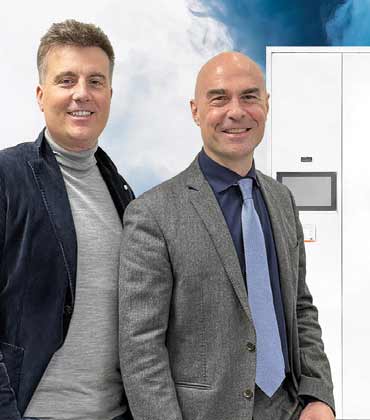
Marco Bianchi, Marketing, Sales and Communication Manager and Guido Rovera, Director of Sales and Marketing
Seventy-five years ago, De Lama pioneered Italy’s first industrial steriliser, setting a legacy of engineering excellence that continues to define the global sterilisation landscape. When Franco De Lama founded the company, he saw a future where sterilisation technology would be indispensable to pharmaceutical and biotech industries. That vision led to the development of a compact saturated steam steriliser, a breakthrough that made high-grade sterilisation accessible to laboratories and emerging pharmaceutical firms. Over the decades, the company has continuously expanded its portfolio, introducing advanced sterilisation technologies—including dry heat, air steam water, superheated water, and ethylene oxide (EtO) sterilisation— each designed to meet regulatory requirements while solving industry pain points. But innovation is only part of the story. De Lama stands out for its deep engagement with clients. “Our niche in pharmaceutical production has allowed us to build an unrivalled expertise in sterilisation—not just by refining technology, but by listening to our customers,” says Guido Rovera, director of Sales and Marketing. “We understand their challenges firsthand and engineer solutions that make a measurable difference. Our history is our foundation, but our focus is always on what’s next.” That customer-first approach led to one of De Lama’s pinnacle innovations—HyPerPure®, a sterilisation technology that overcomes the limitations of traditional methods. When a pharmaceutical client needed to sterilise a heat-sensitive syringe containing blood derivatives, conventional methods weren’t an option. Heat would degrade the product, while EtO posed toxicity risks, regulatory burdens and environmental concerns. De Lama responded with HyPerPure®, which achieves a log 12 reduction, matching the sterility assurance levels of saturated steam sterilisation but without the drawbacks. The impact is undeniable. HyPerPure® ensured uncompromised sterility for even the most heat-sensitive products while cutting energy consumption by 70 percent compared to saturated steam sterilisation. It completely eliminates water waste, reducing environmental impact and operational costs. And by drastically lowering CO₂ emissions, it helped the client meet sustainability targets without compromising on performance. As corporations worldwide—from global enterprises to mid-sized and small businesses—accelerate their pursuit of net-zero CO₂ targets, sustainability has become a decisive factor in equipment selection. “Our technology directly impacts their choices, favouring solutions that align with their sustainability goals,” says Marco Bianchi, marketing, sales and communication manager at De Lama.
Pharma Packaging
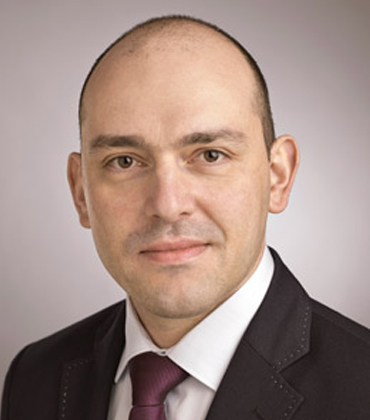
Tomasz Nawrocki, Group Contract Manufacturing & Supply Chain Service Director, Grupa NEUCA
Drug Discovery and Development

Liselotte Hyveled, Vice President, Scientific Partnerships and Integration, Novo Nordisk
Pharma Manufacturing
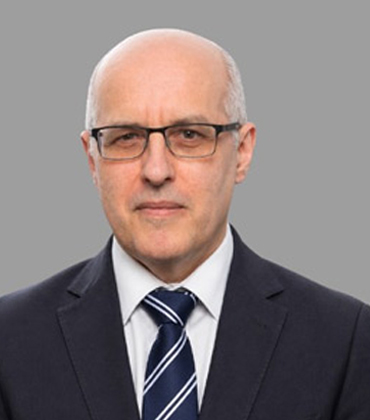
Stefano Biondi, VP of Pre-Clinical, Recordati S.p.A [BIT: REC]
Pharma Manufacturing

Stephen Sheehan, Director of External Development and Manufacturing, Alkermes[NASDAQ: ALKS]
Pharma Tech

Veronique Kodjo, EVP of Global Manufacturing Supply Chain and Quality, CEVA SANTÉ ANIMALE
CMO
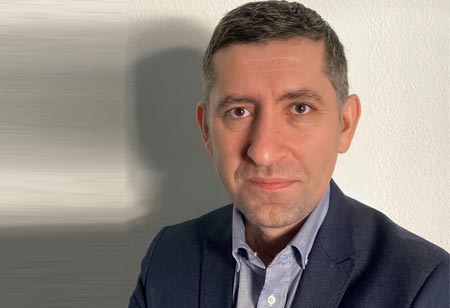
Ozgur Akbulut, Director - Divestment and Contract Manufacturing Lead, Takeda
Pharma Consulting
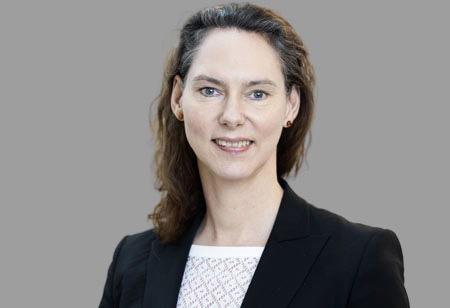
Line Bentsen Zacho, Marketing Director, Orifarm
Tablet compaction analyser systems in Europe improve pharmaceutical quality through precise formulation analysis, process optimisation, advanced automation, innovation and manufacturing consistency.
European research initiatives are increasingly combining computational modelling with AI, experimental science, and automation to accelerate discovery and improve the design of chemicals and materials.
Understanding Formulations before Production
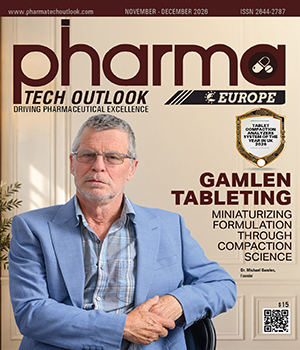
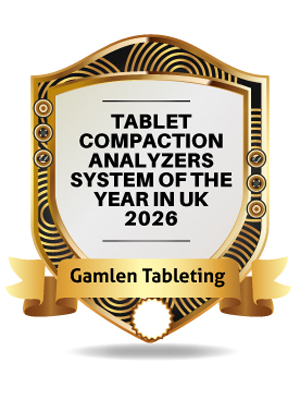
Our cover story recognises Gamlen Tableting as the Tablet Compaction Analyzers System of the Year in UK 2026. Its miniaturised approach to compaction science enables pharmaceutical scientists to characterise powder behaviour using as little as 100 milligrams of material. The D-Series, including the D500 and D1000, supports automated compaction analysis while helping teams examine compressibility, compactibility and tabletability. Gamlen extends this capability through USP testing, tablet manufacture, dissolution analysis, troubleshooting and formulation evaluation, helping development teams investigate material and process changes before committing larger quantities to production.
Gamlen’s laboratory model also supports the evolving requirements of dry granulation and roller compaction. By combining powder characterisation with small-scale tableting and planned roller-compaction capabilities, the company is developing a pathway for examining formulation behaviour across multiple processing stages. Its methodology connects compaction pressure, solid fraction, tensile fracture stress, lubrication, friability and dissolution with practical development questions, strengthening the understanding needed to move formulations towards production.
Contributor Stefano Biondi, Head of Pre-Clinical at Recordati S.p.A., emphasises the importance of defining a target product profile early in drug discovery. His perspective highlights parallel screening, comprehensive characterisation and timely in vivo testing as ways to establish useful benchmarks while identifying potential liabilities. Line Bentsen Zacho, Marketing Director at Orifarm, describes how the company’s expansion into branded healthcare products has transformed its marketing function, extending its focus across the patient and consumer journey while maintaining its broader purpose of improving access to healthcare.
Together, these perspectives show how pharmaceutical progress depends on connecting scientific evidence, formulation understanding and purposeful development strategies. Gamlen’s laboratory-scale compaction expertise demonstrates how earlier knowledge can provide a stronger foundation for more confident formulation and manufacturing decisions.